


 EN
 AR
 BG
 HR
 NL
 FI
 FR
 DE
 EL
 HI
 IT
 JA
 KO
 NO
 PL
 PT
 RO
 RU
 ES
 SV
 TL
 ID
 SL
 UK
 VI
 GL
 HU
 TH
 TR
 MS
 GA
 CY
 EO
 LA
 MN
 NE
 SO
 UZ
 HAW
 LB
Introduction
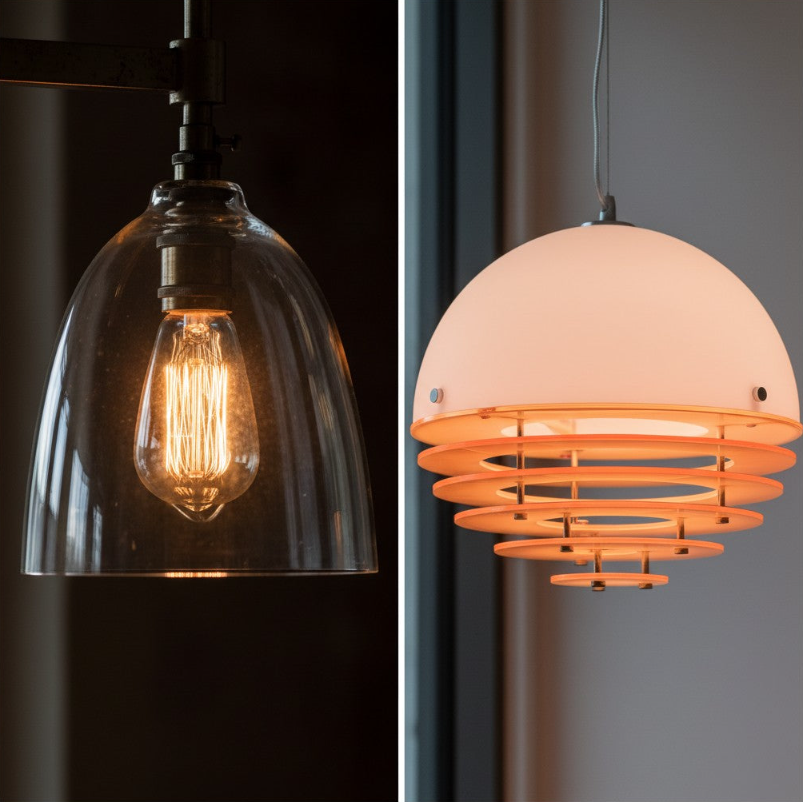
When selecting lighting for hotels, restaurants, retail venues and public corridors, the lampshade material directly determines light output, visual texture, long-term maintenance costs and project budgets. Glass and acrylic are the two most popular diffuser materials for commercial lighting. Many interior designers and FF&E buyers choose solely based on appearance, ignoring heat resistance, scratch resistance, yellowing risks and cleaning difficulties. This article compares the performance differences, drawbacks and ideal application scenarios of acrylic and glass shades, helping you finalise the right material for your full commercial lighting package.
Light Output & Visual Quality
Glass delivers stable and even light transmission. Tempered and frosted glass produces soft, uniform light without colour shift, creating a high-end aesthetic widely favoured in luxury hotel lobbies, fine-dining restaurants and premium guest rooms. Frosted glass emits gentle glow with solid, sophisticated visual texture.
Acrylic also works well for light diffusion. It can be tinted, matted, textured or made into irregular custom shapes. However, standard acrylic carries a slight warm colour cast, and its light transmittance will gradually decline after years of use. It fits modern minimalist commercial spaces, especially for curved and organic shapes that are difficult to achieve with glass.
Heat Resistance & Safety
LEDs generate far less heat than halogen bulbs, yet heat still builds up inside enclosed light fixtures. Glass features excellent heat resistance and will not deform under prolonged heat exposure. Tempered glass is ideal for recessed lights, enclosed pendants and fixtures installed close to ceiling insulation; it will not melt or release unpleasant odours when heated.
Standard acrylic has poor heat tolerance. Continuous high temperature causes warping, sagging and accelerated yellowing. Avoid ordinary acrylic in sealed, poorly ventilated fixtures. If acrylic is required, confirm the manufacturer uses high-temperature modified acrylic and verify the fixture’s heat dissipation design.
Durability: Scratch & Impact Resistance
Tempered glass has a hard surface that resists fine scratches from daily wiping. Its main weakness is brittleness: heavy impact will cause cracking or shattering. Broken glass creates major safety hazards in high-traffic hotel corridors with frequent trolley movement.
Acrylic is shatter-resistant. It will not break into sharp fragments upon impact, making it safer for crowded public areas. The downside is its soft surface: rough sponges will leave permanent hazy scratches across the shade.
Long-Term Yellowing (Critical Pain Point for Hotel Projects)
High-quality glass never yellows. It maintains consistent clarity and light performance for decades with strong UV resistance. It is perfect for coastal hotels and sunlit spaces that require uniform appearance for 5–10 years.
Ordinary acrylic gradually yellows under UV radiation and heat. Anti-UV acrylic slows down ageing but cannot stop it entirely. After several years, discolouration shifts the light tone and breaks visual consistency across the whole hotel lighting system.
Weight, Moulding & Cost
Glass is much heavier. Oversized glass shades increase overall fixture weight, push up freight costs, raise load requirements for mounting brackets and lead to higher breakage risk during shipping. Custom complex glass designs come with higher price tags.
Acrylic is lightweight and easy to thermoform into curved, elongated and irregular shapes with low mould costs. It reduces fixture weight, simplifies installation and cuts logistics expenses. Bulk acrylic orders are generally cheaper than frosted or mouth-blown glass.
Cleaning & Maintenance (Hotel Facility Management Priority)
Glass is low-maintenance. Most neutral cleaners work well, and grease will not seep into the smooth surface, so stains can be wiped off effortlessly.
Acrylic has strict cleaning limits. Alcohol, ammonia and abrasive cleaners will corrode the surface and worsen fogging. Only microfiber cloths mixed with mild soapy water can be used. Kitchen grease easily penetrates tiny scratches and becomes extremely difficult to remove over time.
Common Mistakes & Purchasing Checklist
Typical mistakes: Using standard acrylic in sunlit guest rooms while expecting long-term clarity; fitting large thin glass shades in busy walkways without considering impact safety.
Verify these points before finalising specifications:
- Is the area high-traffic and prone to knocks and collisions?
- Will the shade be exposed to direct sunlight or trapped heat inside the fixture?
- Does the hotel design require consistent appearance and light colour over many years?
- Has the budget accounted for higher freight costs caused by heavy glass components?
- Can the hotel maintenance team follow strict acrylic cleaning protocols?
- If acrylic is selected, is anti-UV modified material specified clearly?
Conclusion
Glass delivers premium light quality, strong scratch resistance and zero yellowing. Tempered glass is the top choice for luxury hotel guest rooms, lobbies and fine-dining venues where long-term visual consistency is prioritised.
Acrylic is shatterproof, lightweight and highly flexible for custom shapes. It works best for retail shops, public corridors and budget-focused commercial projects where impact safety comes first. If you opt for acrylic, always specify anti-UV grade and provide dedicated cleaning guidelines to the hotel engineering team.
There is no universally superior material. The final decision depends on site conditions, design expectations and long-term maintenance plans.
Table of Contents
- Introduction
- Light Output & Visual Quality
- Heat Resistance & Safety
- Durability: Scratch & Impact Resistance
- Long-Term Yellowing (Critical Pain Point for Hotel Projects)
- Weight, Moulding & Cost
- Cleaning & Maintenance (Hotel Facility Management Priority)
- Common Mistakes & Purchasing Checklist
- Conclusion