


 EN
 AR
 BG
 HR
 NL
 FI
 FR
 DE
 EL
 HI
 IT
 JA
 KO
 NO
 PL
 PT
 RO
 RU
 ES
 SV
 TL
 ID
 SL
 UK
 VI
 GL
 HU
 TH
 TR
 MS
 GA
 CY
 EO
 LA
 MN
 NE
 SO
 UZ
 HAW
 LB
Introduction
Brass lighting brings a warm, premium aesthetic that fits luxury hotel lobbies, guest rooms and restaurant spaces perfectly. However, coastal locations come with high humidity, salt spray and salty air. Without proper protection, brass fixtures will slowly tarnish, darken and develop uneven black spots. This issue creates extra maintenance work for hotel management and ruins the consistent design look. This guide covers factory-side finishing standards, selection tips, on-site maintenance and protective solutions to keep coastal brass lighting bright for longer.
- Understand why coastal air turns brass black Brass tarnish is not simple surface dirt. The salt particles carried by sea breeze mix with moisture in the air and trigger chemical oxidation on the brass surface. Ordinary clear lacquer coating will break down quickly under continuous salt corrosion. Once the protective layer fails, the brass substrate reacts with salt and humidity, forming dark, splotchy patina.
The problem gets worse in certain spots. Wall sconces near sea-facing windows, outdoor terraces and poolside lighting are exposed to the highest salt concentration. Temperature changes also speed up coating cracking. Many hotels choose raw unlacquered brass because they love the natural aged look, but this option is not suitable for coastal areas unless the design team accepts fast, uneven darkening.
- Choose the right base material and surface finish at production stage The first line of defense is set at the factory, before mass production. Solid brass performs better than brass-plated iron or brass-plated zinc alloy in coastal environments. Plated base metal has tiny pinholes; salt air can seep through and cause blistering and peeling long before solid brass tarnishes.
For coastal hotel projects, avoid regular clear spray lacquer. Ask the factory to use high-performance protective finishes: powder coating, two-component epoxy clear coat or PVD coating. PVD is one of the most stable options for seaside lighting. It bonds tightly to brass, resists salt spray and will not peel easily. Confirm with your supplier that the finish has passed salt spray testing, and ask for the test report before approving the master sample.
- Sealing details and structural design matter Even the best surface coating can fail if water and salt get trapped inside the fixture. The factory must seal all welding seams, screw holes and gaps thoroughly. Open-back brass wall lights are high-risk for coastal use; salt-laden moisture can drift into the back cavity and attack the metal from behind. Internal wiring chambers and hidden metal brackets also need full coating protection.
If the fixture will be installed outdoors or in open seaside areas, select models with proper IP rating. IP44 or higher is required for splash zones. Drainage holes should be designed to let condensed water flow out, instead of locking moisture inside the housing.
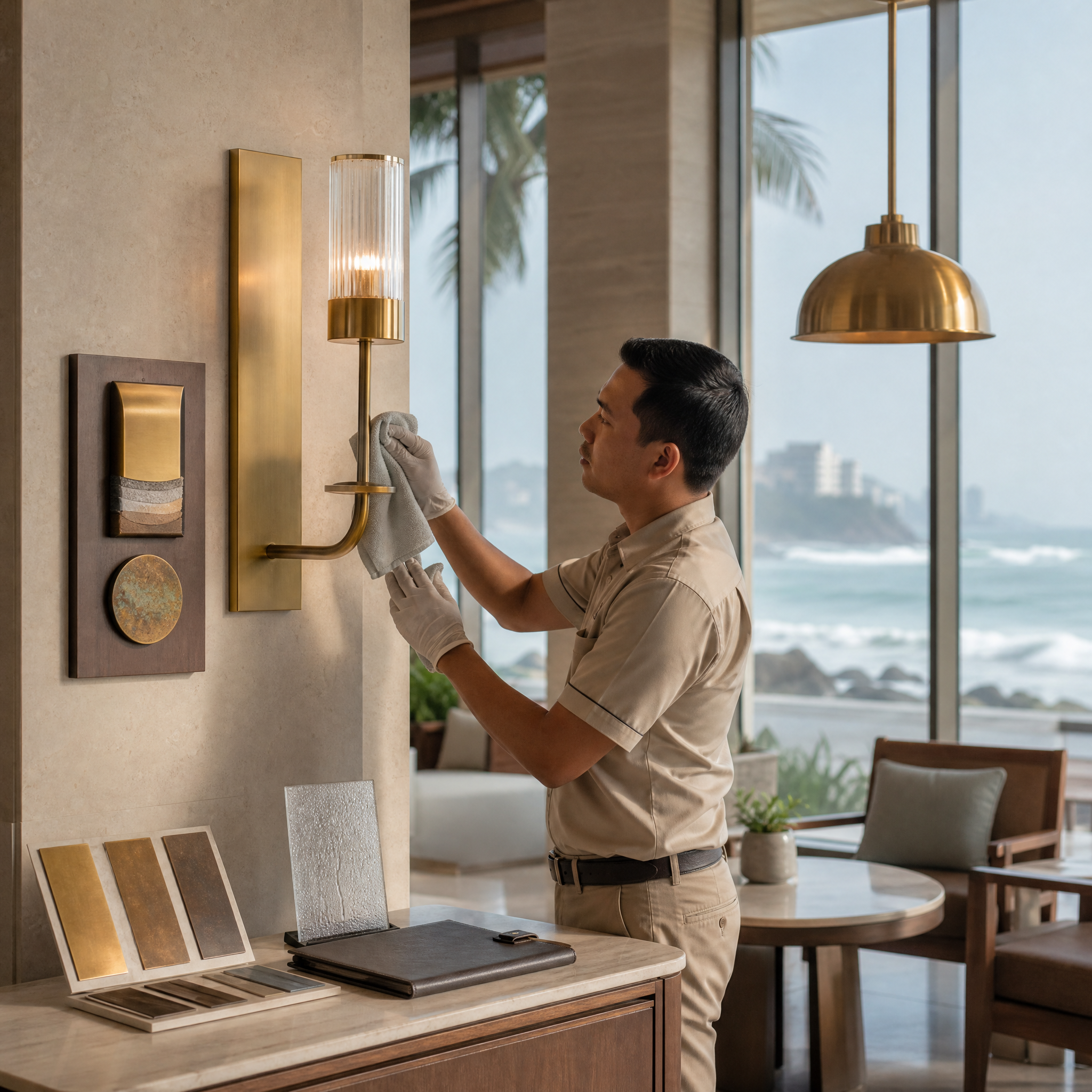
- Regular on-site cleaning routine for hotel maintenance teams Protective coatings slow down tarnish, but they are not permanent. Hotel staff need a gentle, scheduled cleaning routine. Use only soft microfiber cloths with mild neutral cleaner. Do not use abrasive scrubbers, vinegar, bleach or alcohol-based cleaners. These chemicals will erode the clear protective layer and expose the brass underneath. Wipe off salt dust build-up monthly, especially for fixtures facing the ocean. Salt residue left on the surface is the biggest trigger for fast tarnishing. After cleaning, dry every surface completely. Avoid leaving water droplets sitting on brass.
- What to do if tarnish already appears If small dark spots start to show, stop using harsh polishing cream. Ordinary brass polish contains abrasive particles that strip away the factory protective coating. Once the coating is gone, the brass will tarnish even faster.
For hotel projects, the correct fix is localized recoating. Have your lighting supplier or a professional metal finisher sand the affected area carefully and reapply the matching protective clear coat. If the tarnish is widespread and the coating has fully failed, full refinishing is required.
Common Mistakes & Buyer Checklist A frequent mistake is selecting unlacquered living brass for coastal projects without understanding the speed of salt corrosion. Another common error: approving a standard indoor lacquer finish to cut cost, hoping it will hold up near the ocean.
Check these points before confirming your brass lighting order for coastal hotels:
- Base material: solid brass, not brass plating over iron or zinc
- Finish type: PVD, epoxy clear coat or marine-grade powder coating
- Salt spray test standard and available test report
- Sealed seams, closed-back structure and IP rating for exposed areas
- Whether hidden internal brackets are also coated
- Maintenance instructions for the hotel engineering team
- Spare parts and refinishing support from the supplier
Final Thoughts
Coastal brass lighting tarnishing is driven by salt moisture, not poor brass quality. The most reliable solution is a layered system: select solid brass substrate, specify marine-grade protective coating, require sealed fixture structures, and carry out regular gentle salt residue removal.
Talk through all coastal environment requirements with your lighting factory at the sampling stage. Lock the finish and salt spray performance in the master sample. Good factory finishing plus simple hotel maintenance will keep your brass lighting consistent and elegant, avoiding patchy black tarnish that spoils the guest experience.