


 EN
 AR
 BG
 HR
 NL
 FI
 FR
 DE
 EL
 HI
 IT
 JA
 KO
 NO
 PL
 PT
 RO
 RU
 ES
 SV
 TL
 ID
 SL
 UK
 VI
 GL
 HU
 TH
 TR
 MS
 GA
 CY
 EO
 LA
 MN
 NE
 SO
 UZ
 HAW
 LB
Introduction
For lighting importers, brand owners and interior designers, OEM and ODM are two core sourcing models that shape your product portfolio, project timeline and profit margin. Many buyers mix them up and end up with unexpected delays, IP disputes or generic fixtures that fail to stand out in the market. This guide clarifies how each model works for lighting projects, lays out their practical limits, and shares actionable advice to help you pick the right approach for your brand or design scheme.
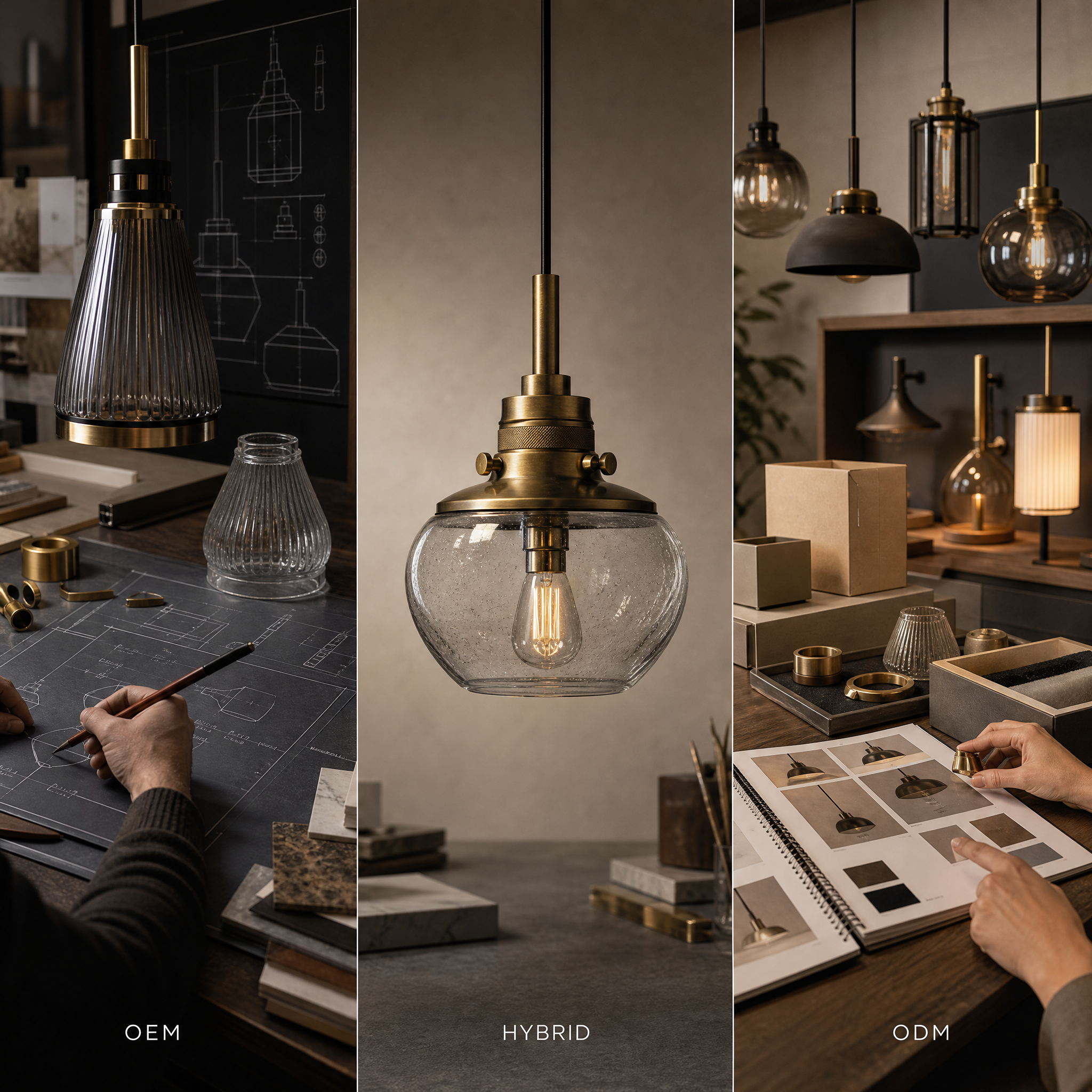
1.OEM Lighting: Full Design Control from Your Blueprint OEM stands for Original Equipment Manufacturing. In this arrangement, you hold the complete design vision and supply the factory with all production assets, including 3D renders, engineering drawings, material specs, optical requirements, finish standards and certification targets. The factory acts purely as a manufacturing partner, building the light fixture exactly according to your technical package.
You will cover all upfront development costs, including prototyping, mold opening, non-recurring engineering work and compliance testing. When the contract is properly drafted with NDA and IP clauses, the design, molds and intellectual property belong to you. This gives you full freedom to adjust every detail, from brass casting texture and glass shape to CRI, CCT, IP rating and internal driver selection.
This level of control comes with trade-offs. OEM development has a longer lead time, and it usually requires higher MOQs because custom tooling demands a minimum production run. If your design has hidden engineering flaws, you carry the cost of revision and rework. It works best for premium brand flagships, exclusive hotel and villa bespoke lighting, and importers who want one-of-a-kind products that competitors cannot easily copy.
2.ODM Lighting: Ready Factory Designs with Limited Customization ODM stands for Original Design Manufacturing. Under the ODM model, the lighting factory develops the core fixture, molds, optics and engineering in advance, and the finished design belongs to the factory by default. You select an existing model from its catalog, then request minor modifications to fit your brand or project.
Common ODM customizations include adding your logo, switching surface finishes, adjusting cable length, picking different color temperature options or redesigning packaging. The main structure, lamp body and optical layout stay unchanged. This keeps your initial investment low, with no new tooling fees in most cases. Samples are ready quickly, and mass production can start within weeks, which suits tight project schedules and small-batch market testing.
The biggest limitation of ODM is lack of exclusivity. Without a signed exclusive agreement, the factory can sell the same base fixture to other buyers. You cannot rewrite the core structure or rework critical optical parts freely. This makes ODM a solid starting point for new importers, startup lighting brands and designers sourcing standard decorative lights for retail or commercial fit-outs where radical uniqueness is not required.
3.Hybrid Customization: The Most Popular Sourcing Strategy for Lighting Buyers Most experienced importers and designers do not rely purely on OEM or ODM. They adopt a hybrid approach that balances speed, cost and originality. You start with a stable, pre-tested ODM lamp platform that has mature molds and valid certifications, then add OEM-level custom tweaks to create a distinctive look.
For example, you may keep the factory’s main housing mold while customizing decorative brass details, glass shades, plating finish or internal wiring layout. This cuts down tooling expense and development lead time significantly, while avoiding the generic look of standard off-the-shelf ODM goods. This hybrid method is widely used in hospitality and commercial lighting projects, where clients want custom aesthetics without the budget and timeline of a full OEM development.
Common Sourcing Pitfalls & Contract Safety Reminders One frequent mistake is assuming ODM customization equals full design ownership. Many buyers only discover later that the factory can supply the same lamp to competitors. Another risk is rushing into OEM development without clear written terms for mold ownership, which may leave you unable to stop the factory from reusing your molds for other clients.
You should also clarify responsibility for test reports and certification updates before starting any project. For OEM, confirm whether the factory will retain tooling after your order finishes. For ODM, decide whether you need non-exclusive, regional exclusive or global exclusive rights to the selected model. Never skip NDA protection for drawings, renders and custom modification details. Poor contract wording is the top cause of IP conflicts in lighting sourcing.
Final Thoughts
OEM is built for creative control and market exclusivity, while ODM delivers fast turnaround and low-risk market validation. Neither option is universally better. New importers and designers often begin with ODM to test market feedback, then convert proven best-selling styles into OEM projects to lock in differentiation and healthier margins.
When you plan commercial lighting projects, the hybrid ODM-plus-custom tweaks model usually offers the most practical balance. Match your sourcing model to your budget, launch timeline and project exclusivity requirements, and always settle IP and mold ownership terms in writing before starting sampling or tooling work. Careful planning helps you avoid costly surprises and build a lighting lineup that fits your brand strategy.