


 EN
 AR
 BG
 HR
 NL
 FI
 FR
 DE
 EL
 HI
 IT
 JA
 KO
 NO
 PL
 PT
 RO
 RU
 ES
 SV
 TL
 ID
 SL
 UK
 VI
 GL
 HU
 TH
 TR
 MS
 GA
 CY
 EO
 LA
 MN
 NE
 SO
 UZ
 HAW
 LB
Introduction
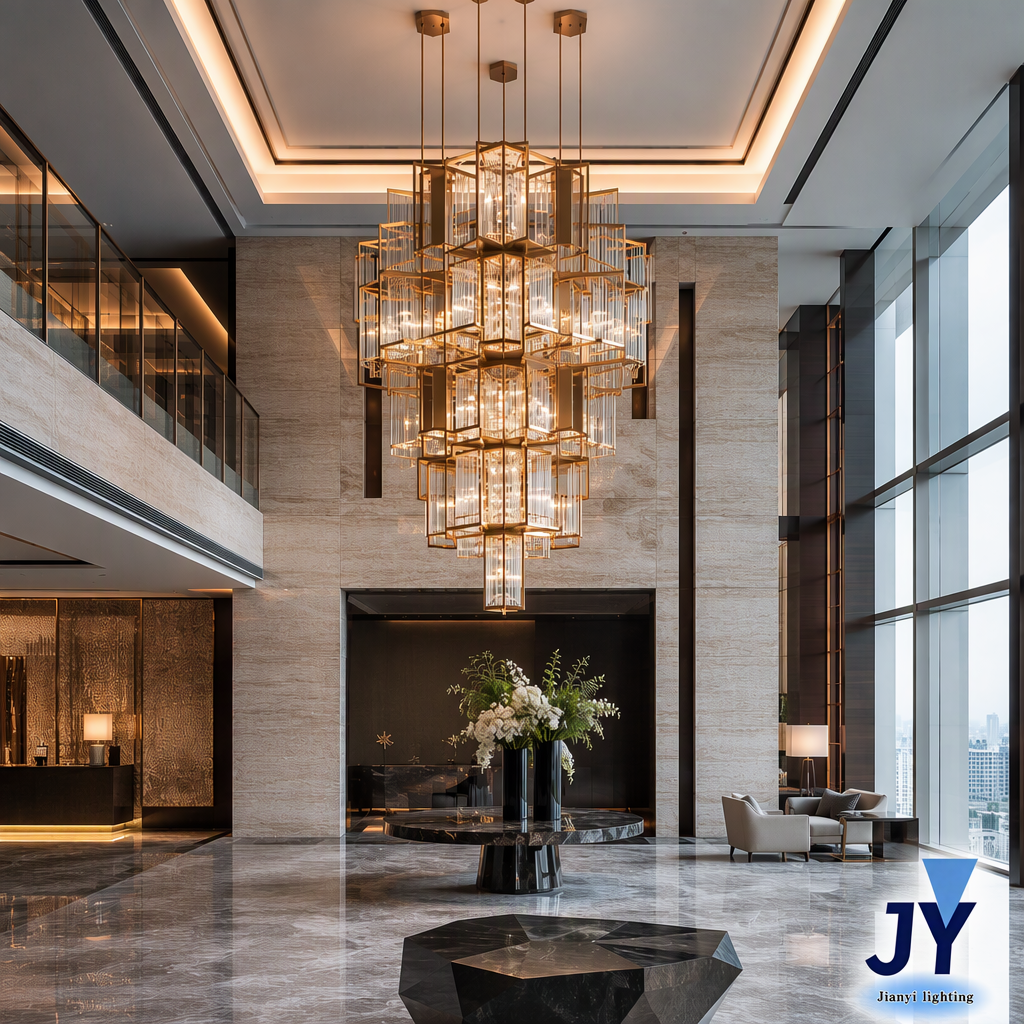
Lighting is not just a finishing touch for hotel lobbies, sales centers and luxury commercial spaces — it shapes the whole visitor experience. Many new interior designers focus heavily on furniture, materials and color palettes, yet overlook critical lighting details. Small lighting errors can lead to uncomfortable spaces, overrun budgets, delayed installation and unhappy clients. Below are the most common lighting mistakes in commercial projects and how to avoid them.
1. Choosing Decor Chandeliers Without Checking Ceiling Load Capacity
New designers often fall in love with a stunning custom statement chandelier first, then try to fit it into the space. They forget to confirm ceiling load limits before specification. Heavy crystal or glass cascade chandeliers require reinforced ceiling structures. If the ceiling cannot support the weight, the beautiful fixture either cannot be installed at all, or costly structural modification is needed on site. This creates project delays and extra expenses. Always share the chandelier weight with your architect or structural engineer at the early design stage.
2. Ignoring CCT and Uniform Light Distribution
A frequent misstep is picking the wrong color temperature for the commercial scene. 3000K warm white is the classic choice for hotel lobbies, luxury villas and reception areas. It delivers a soft, inviting and premium atmosphere. Cool white 5000K–6000K may feel harsh and unwelcoming for hospitality spaces. Another issue is uneven lighting. Designers only plan the decorative centerpiece light, leaving corners, walkways and functional zones dim. Decorative chandeliers are statement pieces, not the only light source for the whole space. Layer ambient, accent and task lighting together.
3. Underestimating Installation & Maintenance Needs
Many custom sculptural chandeliers have complex hanging structures. New designers rarely consider how technicians will access the fixture for bulb replacement and cleaning after handover. For hotels and high-traffic commercial projects, maintainability matters a lot. Avoid designs that require full scaffold setup every time a light source needs service. Work with lighting manufacturers who provide clear installation guides and spare LED parts for long-term upkeep.
4. Picking Low-Cost Custom Lighting to Save Budget
It is tempting to select cheap custom chandeliers to stay within project budgets. As we covered before, low-priced lighting often comes with thin metal frames, low-grade glass or crystal, unstable drivers and skipped pre-assembly testing. When problems appear after installation — flickering lights, tarnished plating, misaligned glass strands — rework is extremely expensive for finished commercial spaces. Saving money upfront on lighting usually leads to bigger losses later. Prioritize suppliers with factory pre-assembly and aging tests.
5. Forgetting Dimming and Control System Compatibility
Commercial spaces often need flexible lighting scenes: bright lighting for daytime check-in, softer dimmed glow for evening events. Some new designers order dimmable LEDs without confirming compatibility with the building’s control system. The chandelier may be marked dimmable, yet it fails to work with the hotel’s smart lighting system. Confirm dimming protocols and control requirements with your lighting supplier before production.
Final Thoughts
Great commercial lighting balances aesthetics, safety, functionality and practicality. A beautiful chandelier only works when it fits the ceiling structure, uses suitable color temperature, is easy to maintain and matches the project’s control system. Work closely with professional custom lighting manufacturers early in the design phase. Share your ceiling drawings, lighting scene goals and budget expectations, and you can avoid these common costly mistakes.
Table of Contents
- Introduction
- 1. Choosing Decor Chandeliers Without Checking Ceiling Load Capacity
- 2. Ignoring CCT and Uniform Light Distribution
- 3. Underestimating Installation & Maintenance Needs
- 4. Picking Low-Cost Custom Lighting to Save Budget
- 5. Forgetting Dimming and Control System Compatibility
- Final Thoughts