


 EN
EN
 AR
AR
 BG
BG
 HR
HR
 NL
NL
 FI
FI
 FR
FR
 DE
DE
 EL
EL
 HI
HI
 IT
IT
 JA
JA
 KO
KO
 NO
NO
 PL
PL
 PT
PT
 RO
RO
 RU
RU
 ES
ES
 SV
SV
 TL
TL
 ID
ID
 SL
SL
 UK
UK
 VI
VI
 GL
GL
 HU
HU
 TH
TH
 TR
TR
 MS
MS
 GA
GA
 CY
CY
 EO
EO
 LA
LA
 MN
MN
 NE
NE
 SO
SO
 UZ
UZ
 HAW
HAW
 LB
LB
Introduction
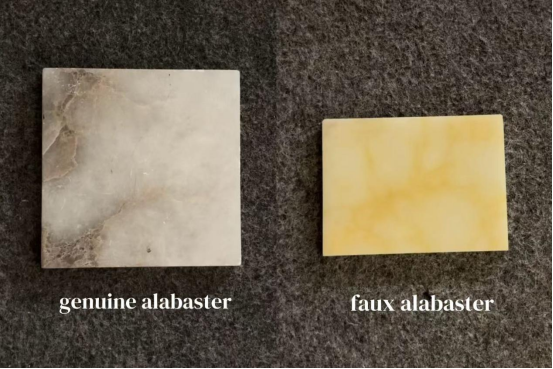
Genuine alabaster and faux alabaster light fixtures often look strikingly similar at first glance, yet they differ significantly in material, lighting effect, and cost. Unfortunately, many homeowners have paid premium prices for what they believed was natural stone, only to discover they received resin-based imitations. This article compares the two materials and provides practical guidance to help you make an informed choice.
1. Genuine Alabaster: Warm, Natural, and One of a Kind
Genuine alabaster is a natural translucent stone, prized for its banded, gemstone-like qualities. When illuminated, it emits a soft, warm, and richly layered glow that synthetic materials cannot truly replicate. Each piece features unique veins and color variations formed by nature, ensuring that no two lamps are ever identical. These fixtures are ideal for statement lighting in living rooms, dining areas, hotel lobbies, and upscale commercial spaces. They add an elegant, timeless character to interiors and only grow more beautiful with age.
2. Faux Alabaster: Affordable, Consistent, and Practical
Faux alabaster is typically made from resin or acrylic, molded to mimic the appearance of stone. It costs a fraction of the natural material, is lightweight, easy to shape, and offers uniform patterns—making it suitable for mass production. These fixtures are a practical choice for budget-conscious renovations, rental properties, or projects requiring multiple matching lamps. They are also less brittle and easier to ship. For buyers prioritizing cost and functionality, faux alabaster can be a reasonable decorative option, provided it is priced and labeled honestly.
3. Choosing by Application Scenario
Genuine alabaster is best suited for focal spaces where visual impact and premium ambiance matter most—such as living room chandeliers, dining pendant lights, hotel lobbies, and showroom displays.
Faux alabaster works well in high-traffic areas, children's rooms, and large-scale commercial installations where safety, weight, and budget take precedence over natural texture.
4. Quick Identification Tips
To tell them apart with confidence, try these simple methods:
Touch and weight – Genuine alabaster feels cool to the touch and is noticeably heavier; resin feels warmer and significantly lighter.
Vein patterns – Natural veins are irregular and never repeat, while resin patterns tend to be repetitive, revealing their molded origin.
Backlight test – Shine a flashlight through the shade from behind. Genuine alabaster diffuses light softly and evenly with a warm tone, whereas resin appears dull, plasticky, and cold in comparison.
Final Thoughts
Choose genuine alabaster if you value natural beauty, warm illumination, and exclusivity—and if your budget allows. Choose faux alabaster if you need an affordable, lightweight, and consistent solution for practical applications. Always confirm the material before purchasing and buy from sellers who clearly state whether the shade is made of natural stone or resin. Honest labeling and transparent pricing are key to a satisfying and trustworthy decorating experience.