


 EN
 AR
 BG
 HR
 NL
 FI
 FR
 DE
 EL
 HI
 IT
 JA
 KO
 NO
 PL
 PT
 RO
 RU
 ES
 SV
 TL
 ID
 SL
 UK
 VI
 GL
 HU
 TH
 TR
 MS
 GA
 CY
 EO
 LA
 MN
 NE
 SO
 UZ
 HAW
 LB
Introduction
Glass and crystal chandeliers are high-value, fragile items that face rough handling during long-distance overseas shipping. Many buyers only focus on product appearance and price, underestimating packaging risks. Even well-made chandeliers can arrive cracked or scratched without proper protection. This article breaks down the whole packing workflow, reveals typical pitfalls, and lists key questions every importer or designer should raise before shipment.
- Why lighting packaging is difficult Glass and crystal chandeliers are hard to pack well for several reasons. First, they combine many different parts: thin blown glass, sharp crystal pendants, delicate metal frames, small connectors and fragile decorative pieces. These components bump and rub against one another easily under vibration during sea transit. Second, chandeliers are often irregular in shape. Standard bubble wrap cannot fit tightly and leaves shifting space inside the box. Third, sea freight brings humidity and temperature changes. Condensation may form inside packages, fogging glass, tarnishing metal and loosening glue joints. Lastly, containers are stacked heavily. Outer boxes must withstand compression from other cargo, which adds extra pressure on the whole packaging system.
- Common damage points Knowing weak points helps you inspect packing quality. Thin glass edges and crystal tips are the most frequent breakage spots. Polished glass surfaces also get permanent scratches if placed directly against metal or rough foam. Loose small crystal drops and accessories rattle inside boxes and chip larger pieces. Another easy-to-miss issue is internal stress: if the metal frame is not fixed firmly, it will twist during transit and crack attached glass or crystal. Many damages do not happen from one hard drop, but from continuous shaking over weeks on the ocean.
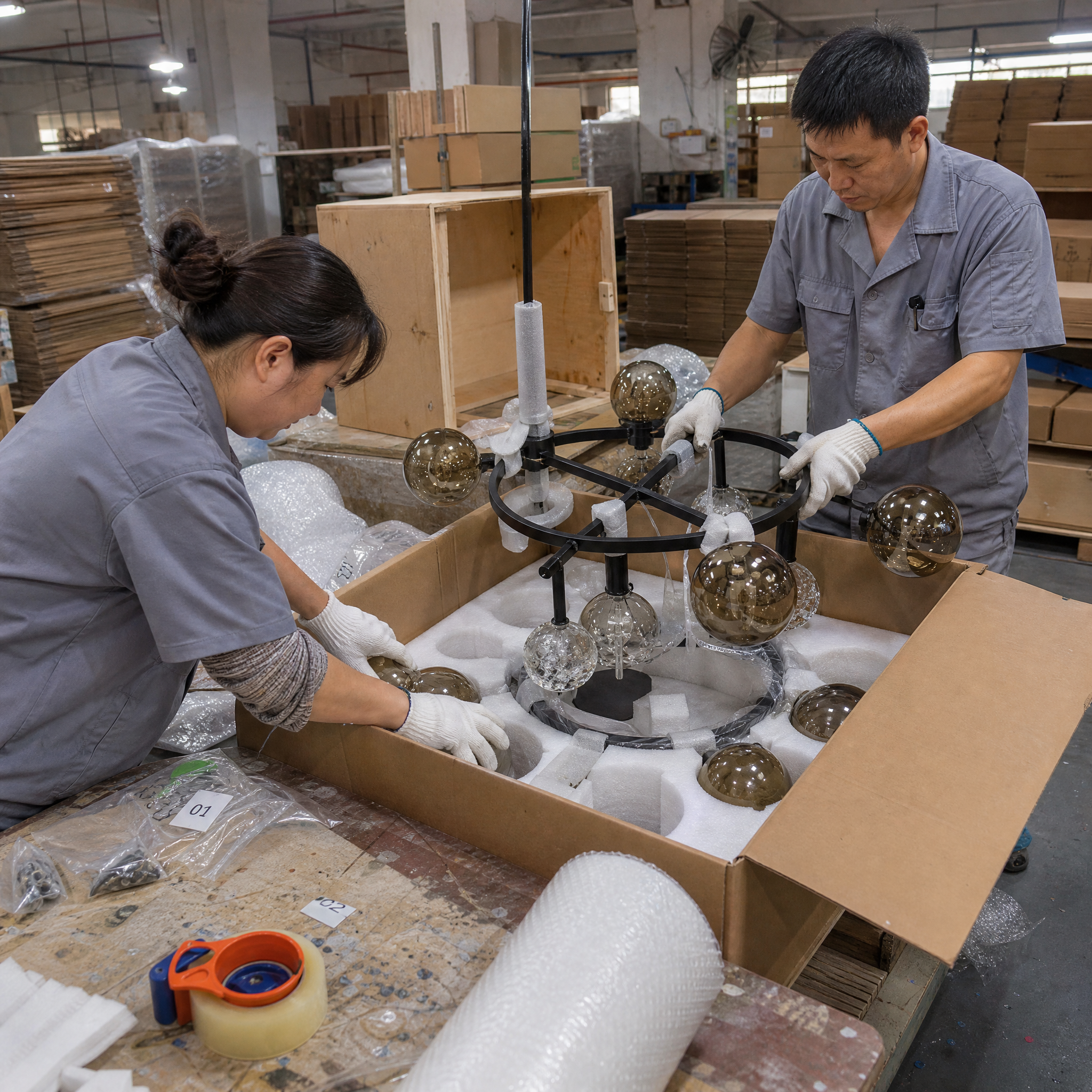
- Inner protection materials Inner protection is the core of anti-breakage packing. Every single glass shade and crystal piece should be wrapped separately. Soft acid-free paper or PE film goes first to protect polished surfaces from scratches. Then bubble wrap or EPE pearl foam is wrapped around. All sharp edges and corners need dedicated foam corner guards. For high-end hotel projects, molded die-cut foam is the best choice. Each component sits in its custom cavity so it cannot move. Empty gaps are filled with foam filler. Desiccant packs must be placed inside every inner box to control moisture and prevent fogging and oxidation. Loose cotton or cheap foam is not recommended, as it compresses quickly and loses protection.
- Carton vs wooden frame vs wooden crate Three outer packaging options are widely used, and each fits different scenarios. Double-wall export cartons work for small, lightweight chandeliers with simple shapes. They are low-cost and easy to handle, but they cannot bear heavy stacking. They are suitable for sample orders and small retail fixtures only. Wooden frames are lighter and cheaper than full wooden crates. They wrap around the main carton for extra support. They are common for medium-sized project chandeliers and can be loaded onto pallets. Solid wooden crates are required for large, heavy, high-value hotel chandeliers. They must meet ISPM‑15 fumigation-free standards for export. Wooden crates offer strong compression and impact resistance. Inside the crate, supporting blocks hold the package stable. After crating, goods are strapped onto export pallets and covered with stretch film.
- Numbering and installation labels For hotel FF&E projects, numbering is not optional. Each disassembled part gets a unique number tag matching the drawing and packing list. The tag marks which room, zone or mounting position this piece belongs to. All hardware, spare crystals and spare glass parts are packed into separate labeled small bags. Clear installation labels are stuck on the inner box and outer package. Labels show part name, quantity, warning notes and assembly reference. This system stops mix-ups on site. Installers can match parts quickly without guessing, which saves huge amounts of time during hotel fit-out.
- Pre-shipment photo records Before sealing boxes and crates, ask the factory to take full packing photos. Standard photos should include: separate wrapping of every glass and crystal part, molded foam layout, all number tags and labels, sealed inner boxes, outer carton or wooden crate assembly, pallet strapping and shipping marks. These photos are critical proof if breakage happens later. You can check whether the packing standard was followed before the goods leave the factory. Without photo records, disputes over who is responsible for damage become much harder to resolve.
- What buyers should ask before shipping Confirm these items clearly with your supplier before shipment:
- Whether all glass and crystal pieces are individually wrapped with scratch-proof material
- Whether custom molded foam is used, or only loose bubble wrap
- Outer packing type: export carton, wooden frame or ISPM‑15 wooden crate
- Whether desiccant is included for moisture control
- Full numbering system matching construction drawings and packing list
- Whether spare glass and crystal replacements are included
- Whether pre-shipment packing photos will be provided
- Cargo insurance coverage and breakage compensation rules
Final Thoughts
Packing glass and crystal chandeliers for overseas shipping is a systematic job, not just wrapping with bubble wrap. The irregular shapes, fragile edges and long ocean transit create many hidden risks. The right inner protective materials, proper outer container selection, strict numbering labels and pre-shipment photo records work together to reduce breakage. For hotel lighting packages, standardized packing is just as important as the fixture quality itself. Always confirm all packing terms in advance and keep photo evidence, so your valuable chandeliers arrive safely for installation.