


 EN
 AR
 BG
 HR
 NL
 FI
 FR
 DE
 EL
 HI
 IT
 JA
 KO
 NO
 PL
 PT
 RO
 RU
 ES
 SV
 TL
 ID
 SL
 UK
 VI
 GL
 HU
 TH
 TR
 MS
 GA
 CY
 EO
 LA
 MN
 NE
 SO
 UZ
 HAW
 LB
Introduction
When you specify metal lighting for bathrooms, coastal hotels, pool areas and tropical humid spaces, surface finish directly decides how long fixtures stay clean and corrosion‑free. Plating and powder coating are the two most widely used finishing methods for lighting frames. Many designers and buyers pick finishes only by appearance, without considering humidity, salt spray and condensation. This article compares how these two processes work, their weak points, and which one you should choose for humid, moisture‑prone projects.
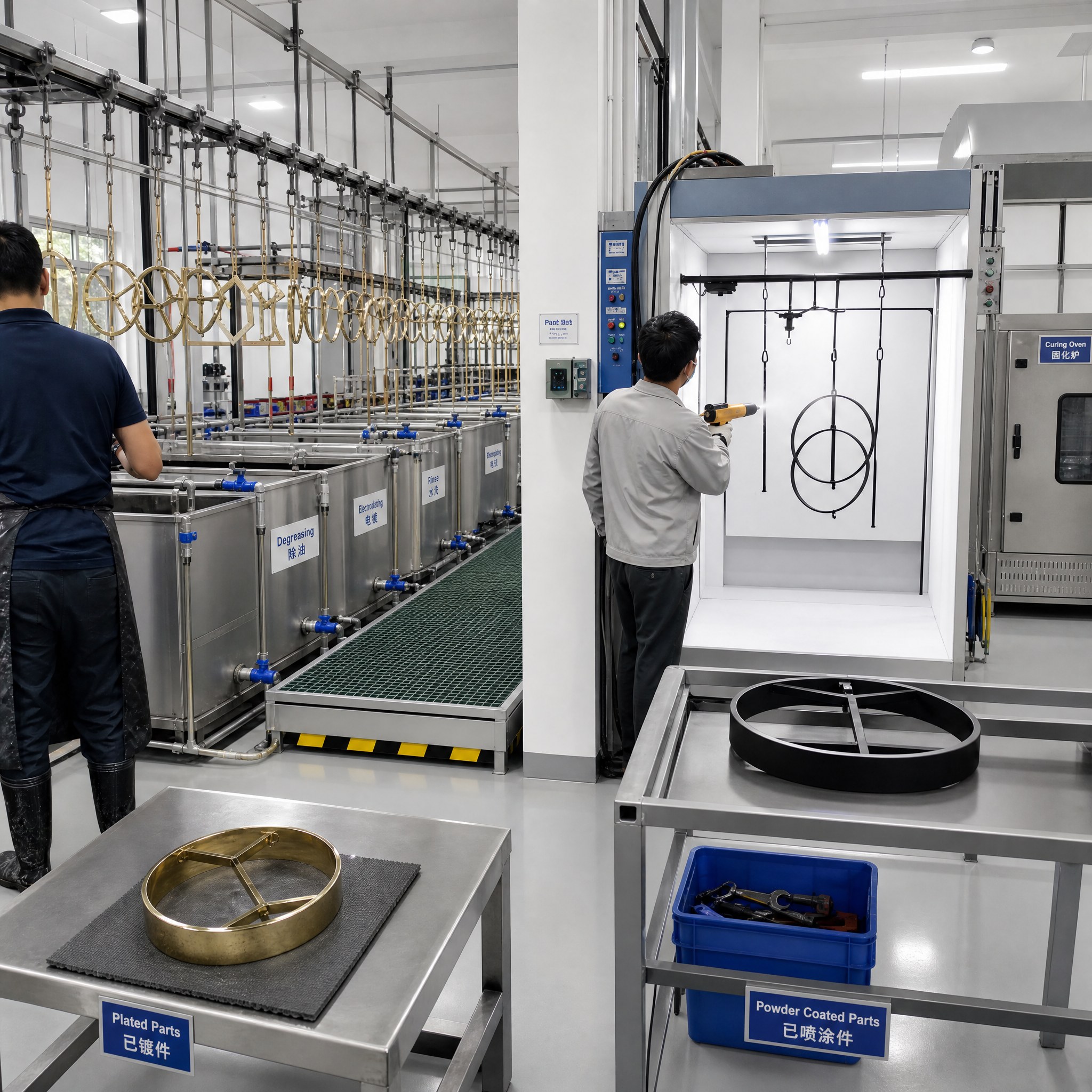
- How electroplating works for lighting Electroplating deposits a thin metal layer onto the base material through an electrochemical process. Common plating finishes for lighting include brass plating, nickel plating, chrome plating and black chrome plating. A thin clear top coat is usually added after plating to slow down tarnish.
Plating delivers a smooth, reflective, high‑gloss metallic look. It is the preferred option when you want a mirror‑like or polished metal aesthetic. But the plated layer is relatively thin. Tiny pinholes are unavoidable during plating. In humid or salty air, moisture can penetrate these micro holes and attack the base metal underneath. Once corrosion starts under the plating, blisters, peeling and dark rust spots appear.
- How powder coating works for lighting Powder coating is a dry finishing process. Dry pigment powder is electrostatically sprayed onto the metal surface, then baked and cured in an oven to form a solid, continuous film. It can be matte, satin or textured, and it comes in almost unlimited solid colours.
Unlike plating, powder coating is a non‑metallic protective film. It forms a thick, barrier‑style cover over the whole metal substrate. When applied properly, it has far fewer pinholes. It seals the metal from moisture and salt particles, making it naturally resistant to humidity. It does not produce a shiny mirror metal effect, but it holds up much better in damp conditions.
- Performance in humid and coastal environments High humidity, condensation and salt air are the biggest test. Standard plating is not ideal for sustained humid use. Even with a clear lacquer top coat, the thin protective layer degrades over time. Heat, cleaning chemicals and repeated moisture speed up cracking. Once the top coat fails, plating tarnishes quickly. For coastal areas with salt spray, regular chrome or brass plating often fails within months. PVD plating is an exception; it is different from conventional electroplating and offers much stronger salt‑spray resistance.
Good‑quality powder coating performs more reliably in humid zones. A properly cured marine‑grade powder coat creates a tough waterproof barrier. It resists salt, moisture and chemical cleaners. It will not tarnish like metal plating. The main failure mode for powder coating is chipping from impact. If the coating gets chipped, water can reach the bare metal and rust will spread under the film.
- Aesthetic differences and project fit Plating shines for luxury decorative lighting. Polished chrome, brushed nickel and antique brass plating create the classic metallic glow that many hotel lobbies and feature pendants require. If your design relies on reflective metal texture, plating is hard to replace. But you must accept higher maintenance risk in damp spaces.
Powder coating is perfect for modern, matte, non‑reflective styles. It is widely used for outdoor lighting, bathroom sconces, corridor lights and poolside fixtures. It hides minor welding marks better than plating. It cannot replicate the polished metallic mirror look, so it is not suitable when the design calls for bright metal reflection.
- Maintenance requirements Plated surfaces need gentle care. Harsh acidic cleaners, bleach and abrasive pads will eat away the clear top coat. Once the top coat is gone, tarnish spreads fast. You need regular waxing to keep the protective layer intact. Touch‑up is difficult because matching plating colour and sheen on site is tricky.
Powder‑coated surfaces are easier to maintain. You can wipe them with mild neutral detergent. The cured coating is scratch‑resistant to daily cleaning. If chips occur, local touch‑up paint can cover small damage, though the repair will still be visible.
Common Mistakes & Buyer Checklist A common mistake is choosing regular electroplating for coastal or bathroom lighting just because of the shiny metal look. Another mistake is confusing ordinary plating with PVD plating and expecting the same durability.
Check these points before confirming finishes for humid projects:
- Is it conventional electroplating or PVD plating?
- If plating is selected, is a marine‑grade top clear coat included?
- If powder coating is selected, is it outdoor / marine‑grade powder and fully cured?
- Has the finish passed salt spray testing?
- Are hidden back surfaces and internal brackets fully coated?
- Can the factory provide maintenance guidelines for hotel staff?
Final Thoughts
For humid, coastal, splash zones and bathroom lighting, powder coating generally offers better corrosion resistance than standard electroplating. It creates a thicker moisture barrier and is less likely to develop hidden corrosion under the surface.
Plating remains the best choice when your design requires a polished, reflective metallic finish. In that case, do not use normal electroplating. Specify PVD plating and confirm salt‑spray test reports.
The rule is simple: prioritize powder coating for durability in damp environments. Choose plating only when metallic shine is the core design requirement, and upgrade to high‑performance PVD to fight humidity and salt.